
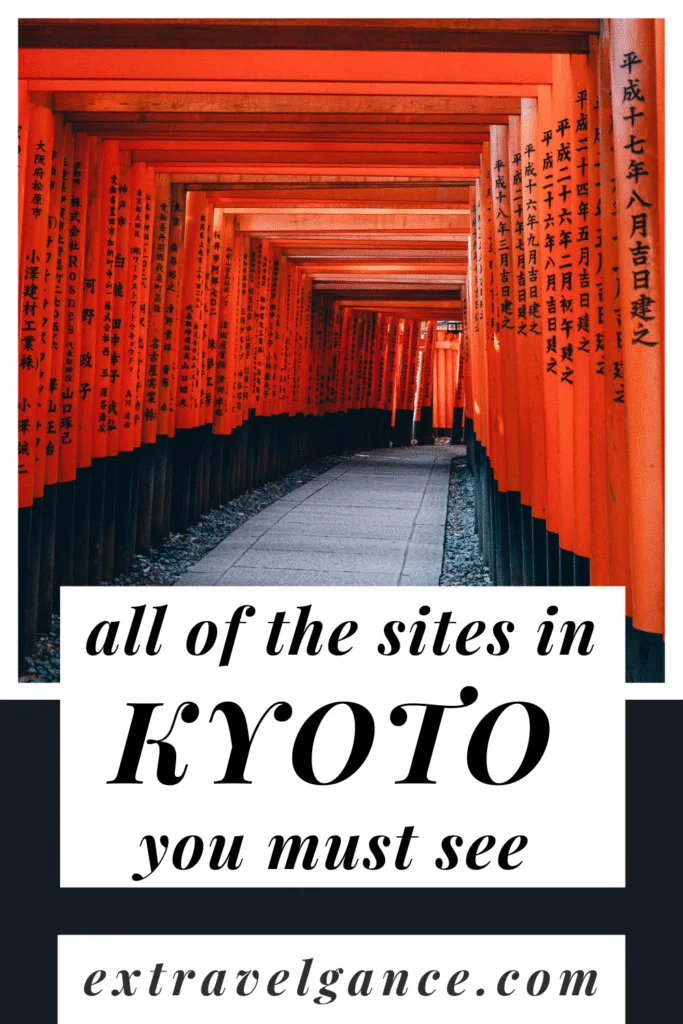
Known as the cultural heart of Japan, Kyoto has many sites you absolutely must see! Kyoto’s centuries of history come alive through ancient temples, serene gardens, and iconic geisha districts. Here are top ten sites that no visitor to Kyoto should leave without seeing.
Note: We may earn a small commission from the affiliate links below.
Kinkakuji Temple
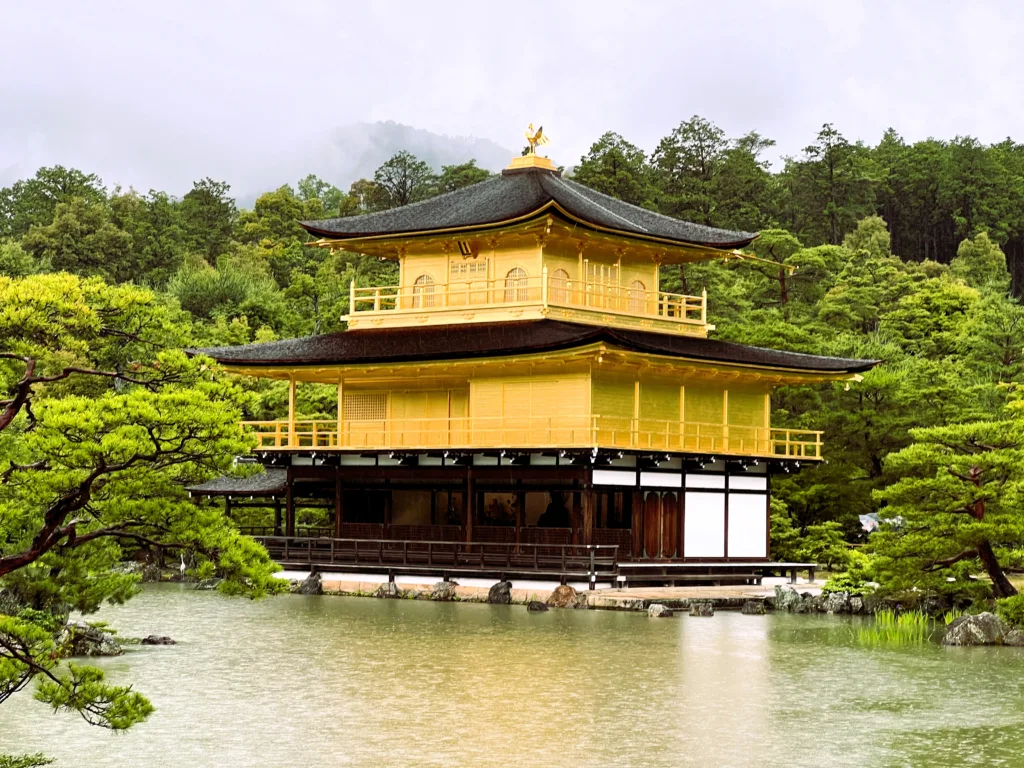
Kinkakuji Temple is a famous golden pavilion dating from 1397. It was a retirement home for Ashikaga Yoshimitsu, a shogun or military ruler of Japan. After his death, it converted into a Zen Buddhist temple. You’ll gap at the gold-leaf gilding glimmering in the sun as you walk along the path. There are beautiful Zen gardens and small shrines to explore. Don’t forget to stop by the teahouse near the exit for a matcha tea and traditional sweet!
Best Time to Visit
The temple attracts tens of thousands of visitors each day, so your best bet it to arrive right at opening. Another good option is about an hour before closing. Visiting hours are 9 a.m.-5 p.m.
Arashiyama Bamboo Grove
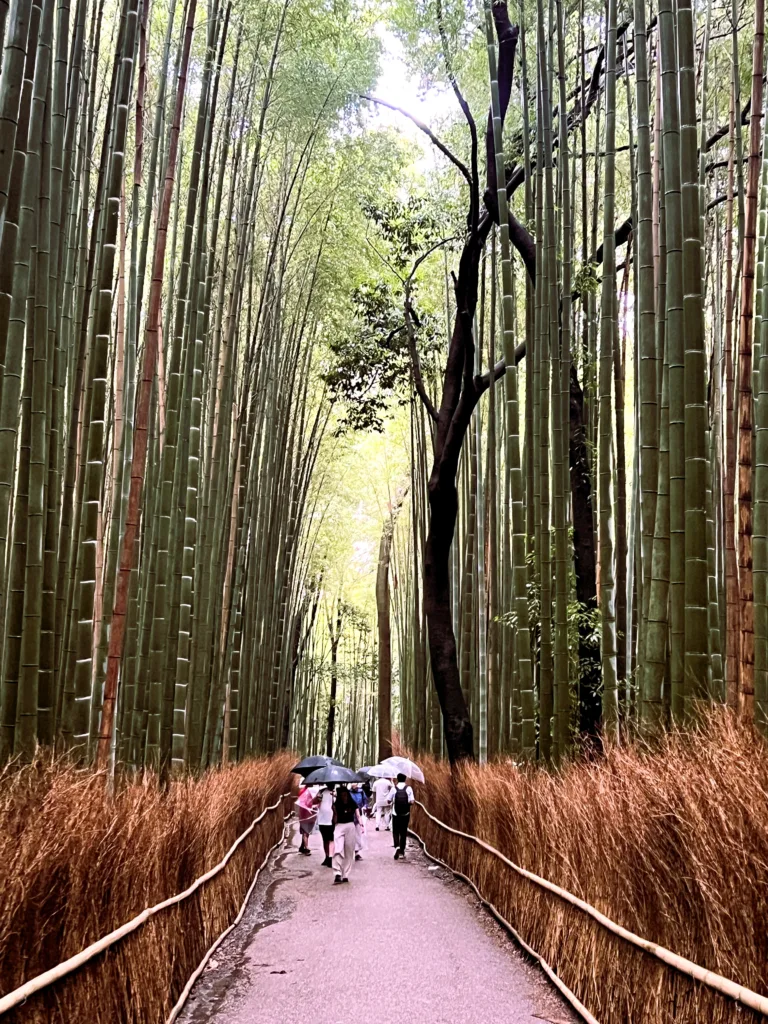
Walk along a path lined with towering green bamboo stalks at the Arashiyama Bamboo Grove. With stalks rising up to almost 100 feet tall, the grove dates to the Heian period (794-1185). There are two paths. The first is Chikurin no Komichi (Path of Bamboo), a quarter of a mile path starting near Tenyru-ji Temple. The second is Chikurin no Sansakuro (Bamboo Forest Trail) which begins north of the Nonomiya-jinja Shrine. This less-traveled route takes you deeper into the grove and is perfect for escaping the crowds. Another fun way to experience the grove is on a rickshaw tour.
Best Time to Visit
You will likely be walking through this on your way to visit other sites in Kyoto. But if you really want to experience the sound of the bamboo stalks swaying in the wind, you will need to go before 9 a.m. or after 5 p.m. The grove is open 24 hours, but you should definitely experience it during daylight unless there is a seasonal illumination event. These are usually in October and December.
Tenryu-ji Temple
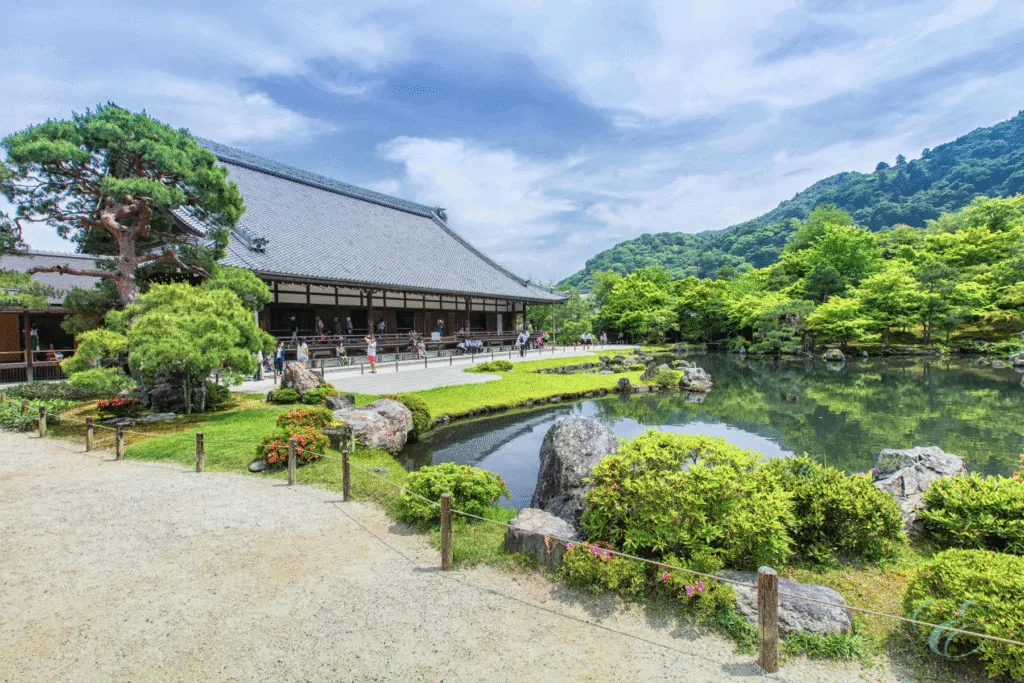
Tenryu-ji Temple is another ancient site in Kyoto on our must-see list. Founded by shogun Ashikaga Takauji in 1339 to honor Emporer Go-Daigo, it serves as the head temple of the Rinzai Zen sect in Kyoto. You can visit the main hall to admire the Cloud Dragon ceiling painting and enjoy refreshments from the temple’s tea house.
The main highlight of the temple is its Sogenchi Teien garden. Dating from the 14th century, this UNESCO World Heritage Site offers amazing views of a pond surrounded by pine trees and the Arashiyama mountains. The garden is terrific in all seasons, with cherry blossoms in the spring, blooming flowers in the summer, autumn foliage in the fall, and lightly dusted with snow in the winter.
Best Time to Visit
This is another of the sites in Kyoto that is best in the early morning. From 8:30-10 a.m., the garden is quiet and the morning sunlight reflects beautifully on the gardens’ Sogen Pond.
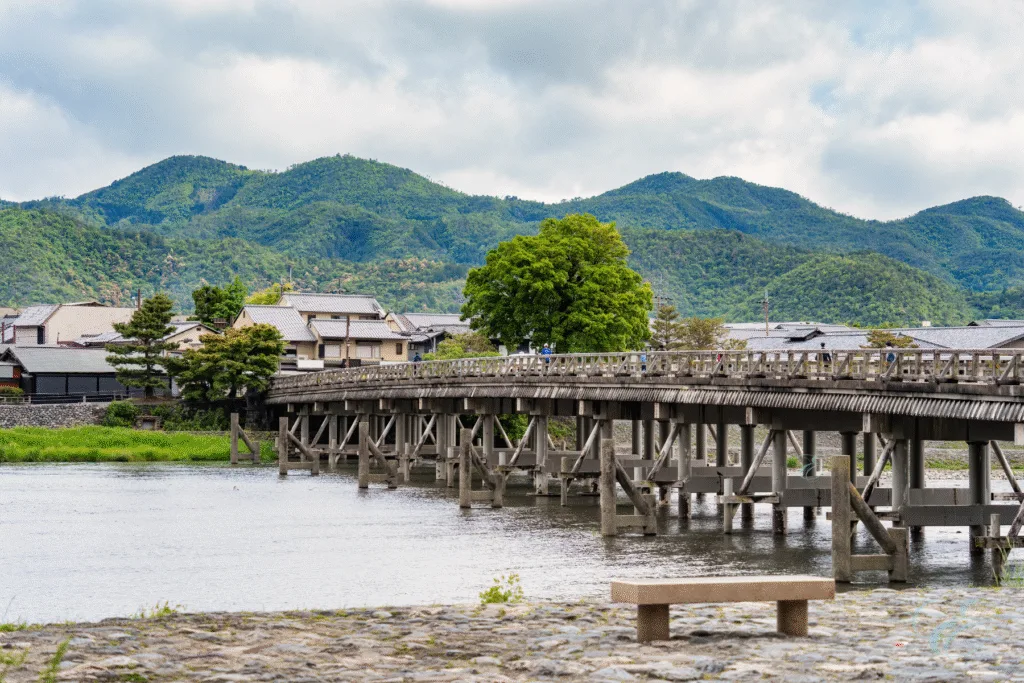
Togetsukyo Bridge
Spanning the Katsura River is the wooden Togetsukyo Bridge. The 1930s era wooden bridge emulates the original one built in the Heian period (794-1185). You can walk across the bridge for panoramic views of the river and mountains.
Best Time to Visit
This is getting repetitive, but the best time to visit the bridge is in the early morning (between 7-9 a.m.) or late afternoon before sunset. This is mainly due to crowds, but the softer sunlight during those hours also increases the beauty of the scenery.
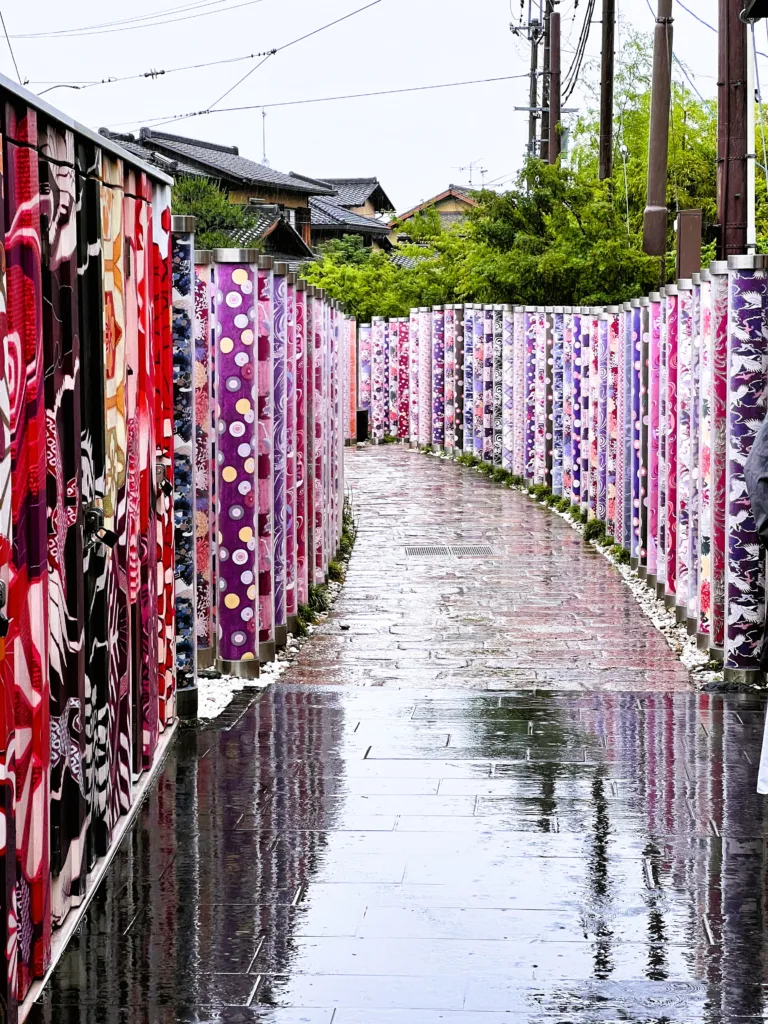
Arashiyama Kimono Forest
Arashiyama Kimono Forest is an outdoor art exhibit near Randen Arashiyama Station. It features more than 600 pillars wrapped in kimono fabrics. Created in 2013 by artist Yasumichi Morita, the pillars showcase traditional Kyo-Yuzen dyed fabrics.
Best Time to Visit
Finally, one of the sites in Kyoto is not at its best in the morning! Arashiyama shines with LED lights at night, making sunset-9 p.m. the best time to visit.
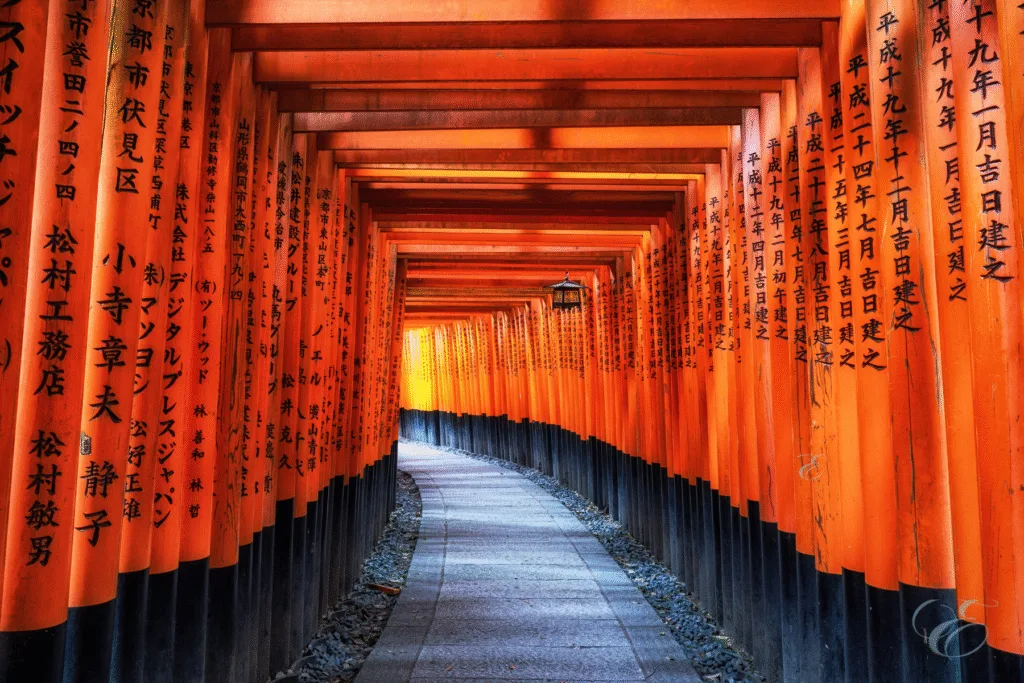
Fushimi Inari-taisha Shrine
Dating from the 8th century, Fushimi Inari-taisha Shrine is one of the most recognizable sites in Kyoto (and all of Japan). It’s known for its bright red Torii gates winding up Mount Inari. The shrine honors Inari, the god of rice, prosperity, and business. Scattered throughout the complex are kitsune (fox) statues who serve as messengers to Inari.
You can walk through the Senbon Torii (thousands of torri gates) trail spanning 2.5 miles up the mountain. At first, the trail is packed with crowds. But if you keep at it, eventually the crowd thins out. Then you can experience the peace of being all alone in this striking environment. If you hike up about 45 minutes, your reward is a panoramic view of Kyoto and a few places to rest and eat.
Activities
The main shrine buildings feature traditional architecture and prayer areas. To pray at a Shinto shrine, purify yourself at a temizuya (water basin) by washing your hands and rinsing your mouth. Then throw a coin into the offering box (any amount is fine, but 5 yen is good luck) and ring a bell if one is present. Bow twice, clap twice, and then put your hands together to say a prayer. Once your prayer is complete, bow once more. All visitors are welcome to pray to the God of their own understanding as long as they are respectful of the space.
If you have a student in your group, make sure to stop by the Higashimaru-jinja Shrine. Your student will want to say a prayer here for academic success. And everyone will want to see the thousands of origami cranes made by Japanese students hoping to pass entrance exams displayed outside the sub-shrine!
Another activity is to purchase an ema (wooden plaque), write a wish on it, and hang it on a rack at the shrine as an offering to the gods. Ema at Fushimi Inari-taisha are the shape of a fox with a blank face. You fill in the face of the fox giving it a unique look and personality.
A highlight is the Omaokaru Ishi hall where you see two rocks. After putting a coin in the donation box, make a wish. Then pick up one of the rocks. If it is lighter than you expected, your wish might come true soon. If it is heavier, you may have to wait awhile (or forever) for your wish to come true!
Best Time to Visit
The shrine is open 24 hours a day, so you can visit at any time. Crowds are lightest before 8 a.m. or after 5 p.m. You can even enjoy the shrine after dark as the pathways have lights. But even if you go at the most crowded time of the day, remember that hiking just a little farther up than most people go will give you a tranquil experience.
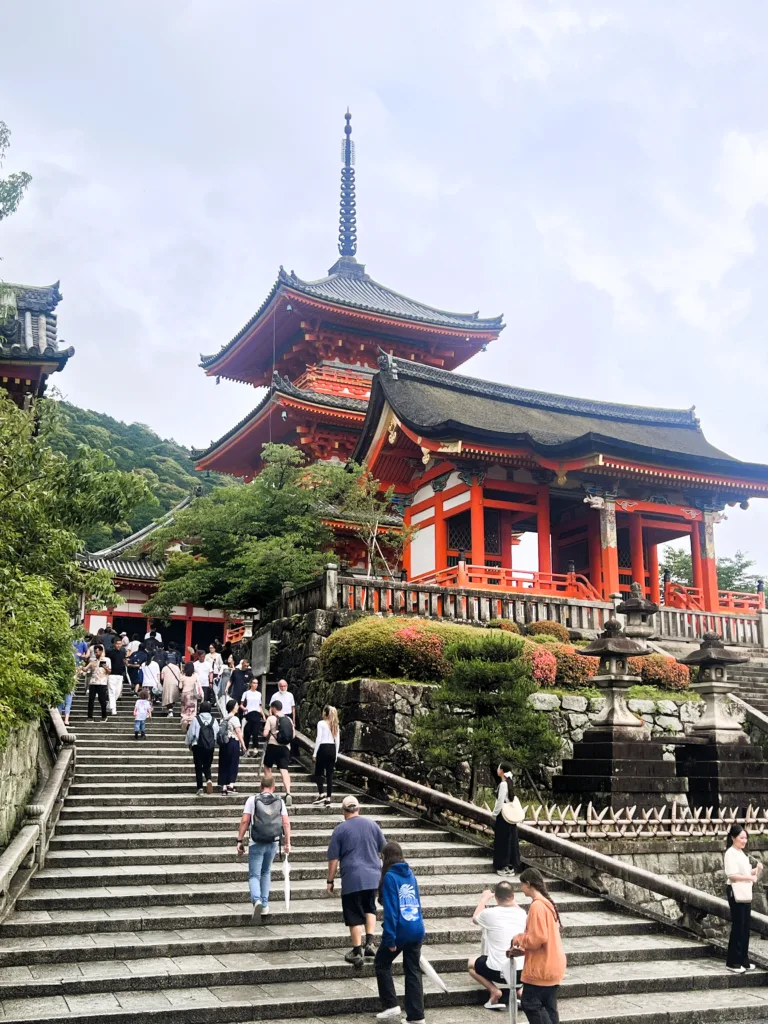
Kiyomizu-dera Temple
A UNESCO World Heritage site, Kiyomizu-dera Temple dates from 778. It is dedicated to Kannon, the Buddhist goddess of mercy. It’s particularly famous for its wooden stage that juts out over the hillside, providing panoramic views of Kyoto.
The grounds consist of several buildings. You can go inside the Main Hall (Hondo) to see the enshrined Kannon statue. You can also see the interior of other buildings, but expect decor to be modest. Temple is famous for it’s exterior architecture, terraces, walking paths, and tremendous views.
Activities
Looking for love? Kiyomizu-dera Temple might just be the right place for that! The Jishu Shrine is dedicated to love and matchmaking. It has two mossy stones set about a 10th of a mile apart. If you can walk between the two with your eyes closed, true love is in your future.
Another fun activity is drinking from the Otowa Waterfall using long-handled cups attached to a pole. Three streams flow from this fountain, and each provides you with success in either longevity, success, or love. What would you choose? A long life, personal or business success (and likely $$$), or true love? Not an easy choice! I prefer a cocktail mixing the three! You can drink from all three, but tradition calls this greedy. But many people choose two of the three, so at least you can live long and in love, live long and be rich, or be rich and in love. Doesn’t sound too bad to me!
Best Time to Visit
Like all other famous sites in Kyoto, the best time to visit is early morning before crowds arrive. It opens at 6 a.m. and usually closes at 6 or 6:30 p.m. unless there are special night viewing events.
Yasakanoto
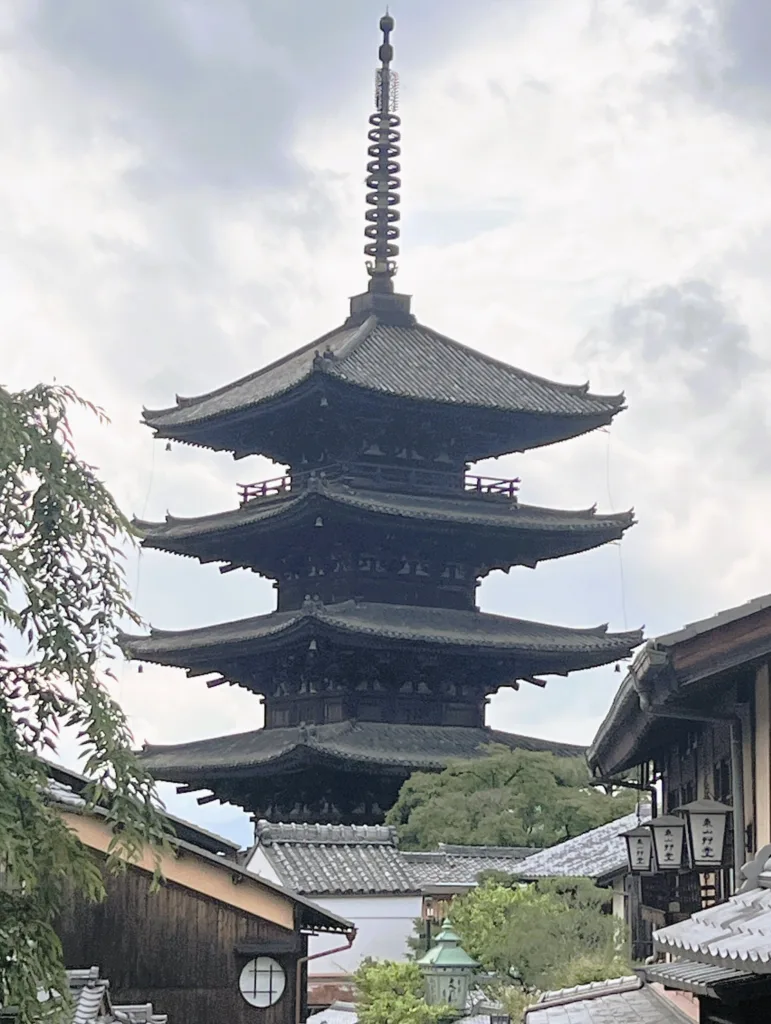
Yasakanoto is a 6th century five-story pagoda, although the current structure dates to 1440. It’s a landmark of the Higashiyama district and serves as a backdrop to the winding narrow streets of shops and tea houses. You cannot go inside the pagoda or visit the various levels. So this just serves a backdrop to your visit to the shopping streets described below.
Best Time to Visit
You can visit the pagoda any time. But if you want unobstructed photos and a peaceful environment, early morning (before 9 a.m.) is best.
Sannenzaka & Ninenzaka Streets
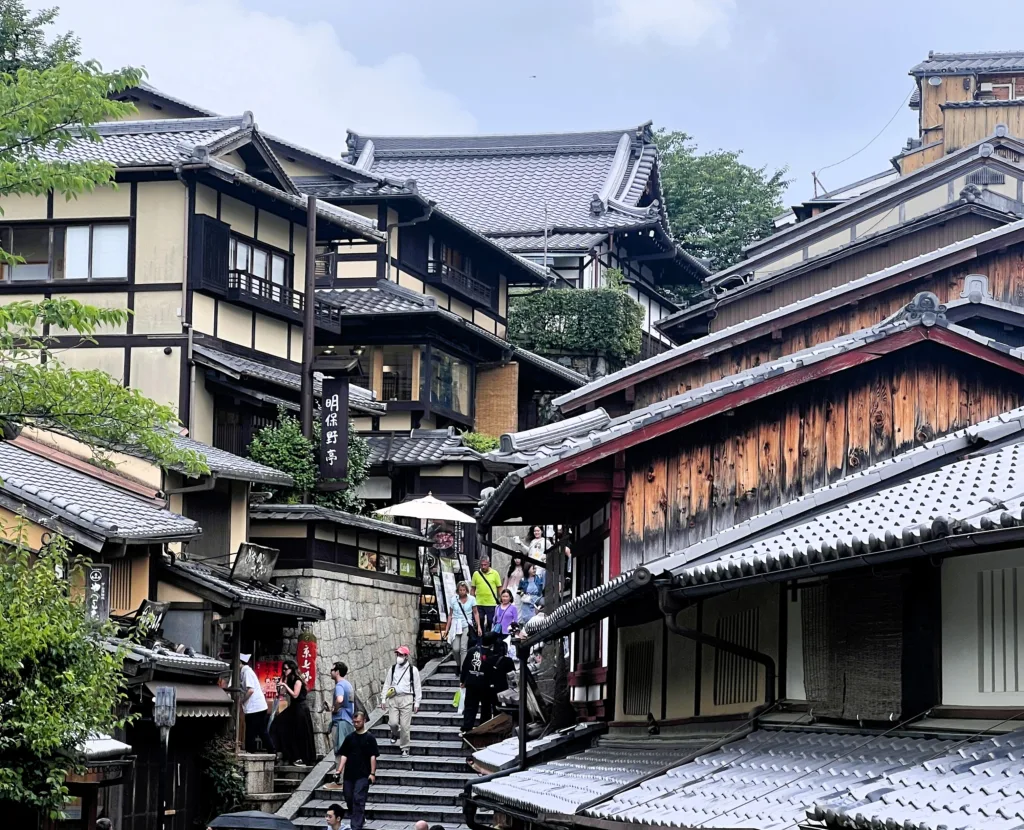
Sannenzaka and Ninenzaka Streets are two sloping streets in Kyoto’s Higashiyama district. These streest are lined with traditional wooden buildings and filled with shops. This is one of the best sites in Kyoto to get all of your souvenirs. Some of the best things you can buy in Kyoto are matcha tea, silk textiles, pottery and ceramics, woodblock prints, sensu (folding fans), incense, Japanese dolls, and handmade soups and skincare.
There are plenty of good things to eat in the Higashiyama district. You can sample yatsuhashi (cinnamon flavored rice treats), kyo-tashi (made with rice flour, sweet bean paste, and matcha), and matcha soft serve. Or visit one of the many teahouses serving freshly whisked matcha green tea. Restaurants abound featuring seasonal dishes with local vegetables, tofu, and seafood. There’s also great street food like yakitori (grilled chicken skewers), dango (sweet dumplings), and yuba (tofu skin). Thirsty? Try to some yuzu (citrus) or plum-based cold beverages. Or sample some sake rice wine.
Best Time to Visit
If you want to experience these quaint, old-fashioned streets with no crowds, go before the shops open or after they close. Generally, the shops are open between 9-10 a.m. and close between 5-6 p.m. But the main reason you are visiting is probably to shop and eat, so just go whenever it makes the most sense for your itinerary. Yes, it will be crowded, but so will all the best sites in Kyoto at that time of day!
Gion District
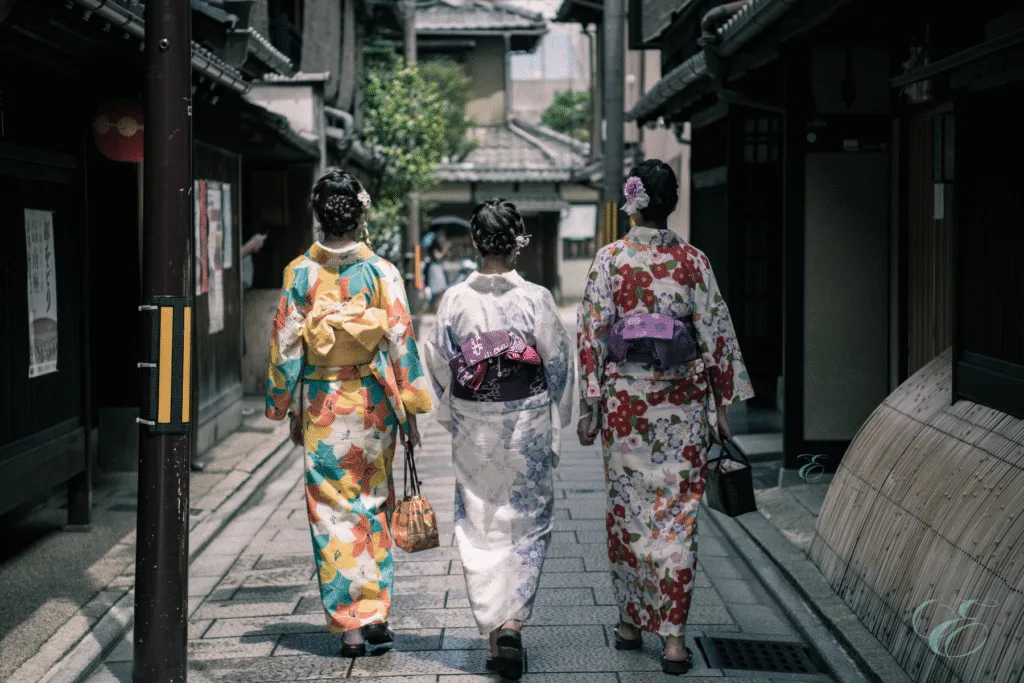
The final place in this list of best sites in Kyoto is the Gion District. This is Kyoto’s famous geisha and entertainment quarter. It’s a historic area known for its traditional wooden machiya townhouses, teahouses, and narrow cobblestone streets. During the day, you can admire the architecture, enjoy the restaurants and teahouses, and shops. But in the evening, you may glimpse geiko (geisha) and maiko (apprentice geisha) hurrying to their appointments dressed in traditional garb.
What are Geiko/Geisha?
A geiko is a geisha from Kyoto. I think many Westerners think geisha are prostitutes, but this is not the case. In reality, they are female entertainers trained in classical music, dance, tea ceremony, and conversation. They host guests at teahouses dressed in colorful kimonos and wearing white makeup and elaborate hairstyles. A woman will serve as a maiko for 5-10 years before becoming a geisha.
In the 16th century, male performers called taikomochi entertained the elite. But women started to assume the role in the 18th century. Historically, women were sold by their families to geisha houses to be trained as a maiko. During the peak of the profession in the early 20th century, there were an estimated 80,000-100,000 geisha and maiko in Japan. Today, there are only 1,000-1,500 active geisha and maiko remaining, mostly in Kyoto. The path to becoming a geisha begins right after a girl finishes junior high and requires years of training and dedication. Maiko can’t have cell phones, carry money, or have boyfriends. All of these restrictions ease up when they become a geisha. But it’s not difficult to understand why a 14 year old girl might be hesitant to sign up for this field of work!
Attractions
There are plenty of things to do in the Gion District. Originally part of Kyoto’s ancient water management system, the Shirakawa Canal runs through the district. It is picturesque, lined with machiya houses, willow trees, and stone paths. Take a walk along the canal and enjoy the views.
Visit Yasaka Shrine which dates from the year 656. It features bright red gates, lantern-lined pathways, and traditional architecture. Many of the interactive activities found at other shrines are offered here, like ema wish plaques, fortune omikuji fortune drawings, and Shinto prayer areas. It is open 24 hours a day, but early morning or after dark are preferred times.
Walk along Hanami-koji Street to see the traditional houses, visit a teahouse, and shop for souvenirs. In the evening, you might see geiko and maiko walking to their appointments at the various teahouses. Attend a show at Gion Corner where you can view traditional Japanese performing arts like dancing, music, flower arranging, the tea ceremony, and more in about one hour. Performances are each day at 6 and 7 p.m.
I think taking a walking tour of the Gion District is the best way to visit. You see all the Gion attractions above, but you will also learned all about the geiko and maiko lifestyle as told by a local guide.
Best Time to Visit
Obviously you want to go at night, just so you might get a glimpse of a geiko or maiko walking along the streets! This is never guaranteed. And if you do, don’t gawk and take photos. In fact, it’s illegal to take photos in the Gion district’s private alleys and streets. If you see geiko or maiko in other parts of the city, you can take a photo. But it should be from further away and from the back.
Building a Kyoto Trip Itinerary
Now that we’ve covered all of the must-see sites in Kyoto, you may be wondering how to put it all together. And I’m wondering the same thing! By my count, we need 6 days to follow all of my “best time to visit” advice above. And on most of those days you will be busy early in the morning and later in the evening. But the afternoons when everything is crowded, you will be at loose ends. And that’s OK if you are able to enjoy (and like) slow travel.
2-3 Day Plan
But most of us will need a more streamlined approach to Kyoto. I think it’s reasonable to spend 2-3 days in Kyoto. Here’s how I would tackle it in these scenarios:
- 3 Days
- Day 1 – Kinkakuji Temple, Arashiyama Bamboo Grove, Tenryu-ji Temple, Togetsukyo Bridge, and Arashiyama Kimono Forest
- Day 2 – Fushimi Inari-taisha Shrine and Kiyomizu-dera Temple (and maybe a half-day trip to Nara if you have time)
- Day 3 – Yasakanoto Pagoda, Sannenzaka & Ninenzaka Streets and Gion District
- 2 Days
- Day 1 – Kinkakuji Temple, Arashiyama Bamboo Grove, Tenryu-ji Temple, Togetsukyo Bridge, and Arashiyama Kimono Forest
- Day 2 – Fushimi Inari-taisha Shrine, Kiyomizu-dera Temple, asakanoto Pagoda, Sannenzaka & Ninenzaka Streets and Gion District
1 Day Plan
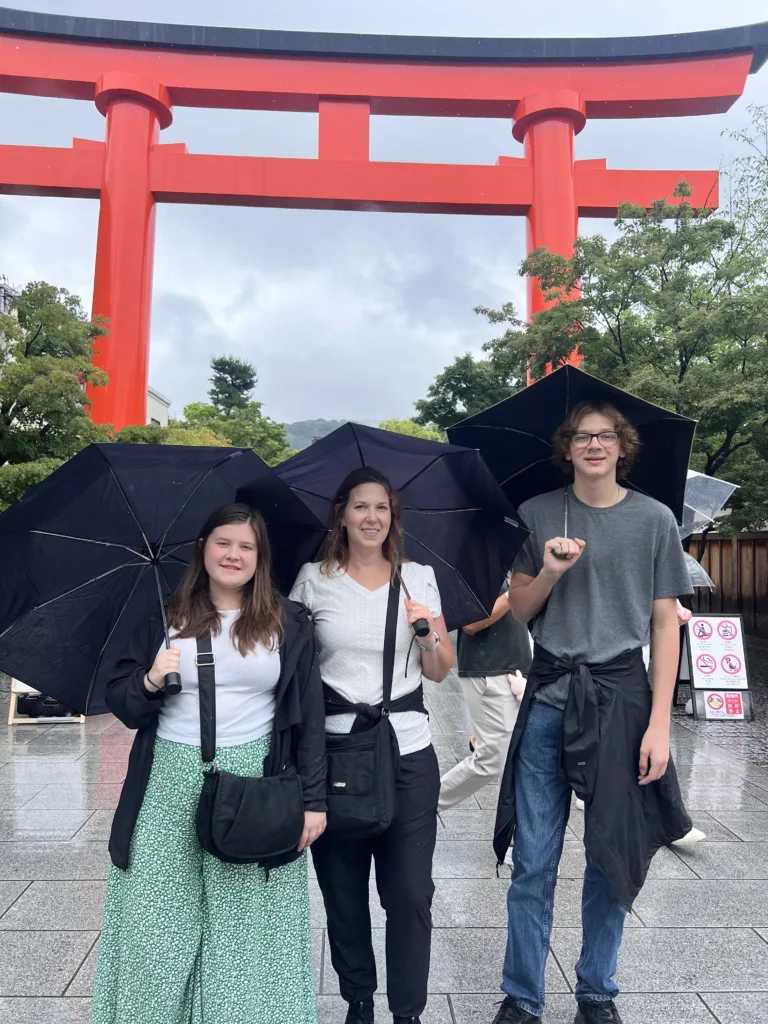
But what if you only have one day? When I was planning my recent trip to Japan, I could really only squeeze out 1.5 days for Kyoto. I knew that I wanted to see absolutely everything I could in that time, plus take a side trip to Nara. And I knew my teens would be frustrated with me if I tried to navigate around all over the city, walking in the wrong direction and getting lost. I also suspected they might get bored seeing all the shrines and temples after awhile.
So I booked this 10 Must-See Spots in Kyoto private tour. It wasn’t cheap, but we had a private guide that we simply followed around all day. She navigated us through public transportation and taxis, had us stand in the right lines, told us what to look at, and chatted to us about all things Japan vs. the US. We all enjoyed the day despite the fact that it rained for much of it.
Our private tour included Gion, but during daylight hours. So I also booked an evening walking tour of the Gion District for our arrival day in Kyoto. It rained hard for most of this tour, but it was interesting to hear about the geiko culture and we even got to see a maiko.
These two tours ensured that we saw the best of Kyoto in a very brief amount of time. My only regret is that we didn’t have much time to souvenir shop!
What’s on your list of must-see sites in Kyoto?
Tell us below! Also follow us on Facebook, Instagram and Pinterest so you never miss a post!