
India captures your senses and your spirit from the moment you arrive. Ancient traditions and modern energy collide in the most captivating ways. Whether you’re drawn by the majestic architecture, vibrant festivals, or flavorful cuisine, India offers an experience unlike anywhere else. Here are the top 7 reasons to put India at the top of your travel list.
Note: We may earn a small commission from the affiliate links below
The Rich Cultural Heritage
India surrounds you with color, sounds, ritual, and stories that stretch back thousands of years. Every street, temple, and village carries a living legacy. Travelers don’t just observe India’s culture—they step directly into it.
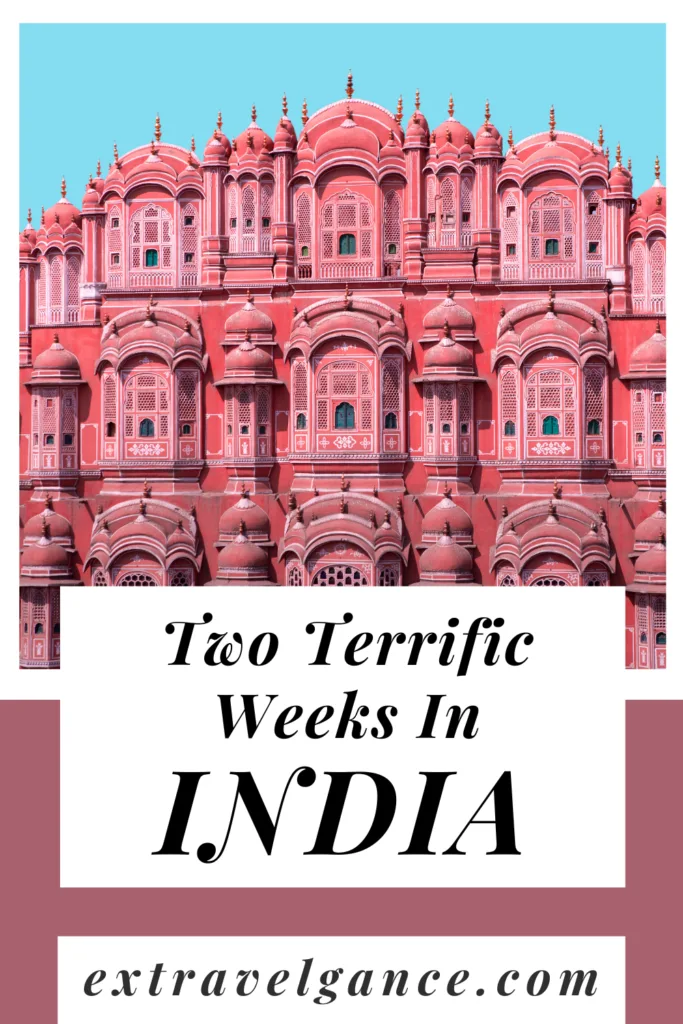
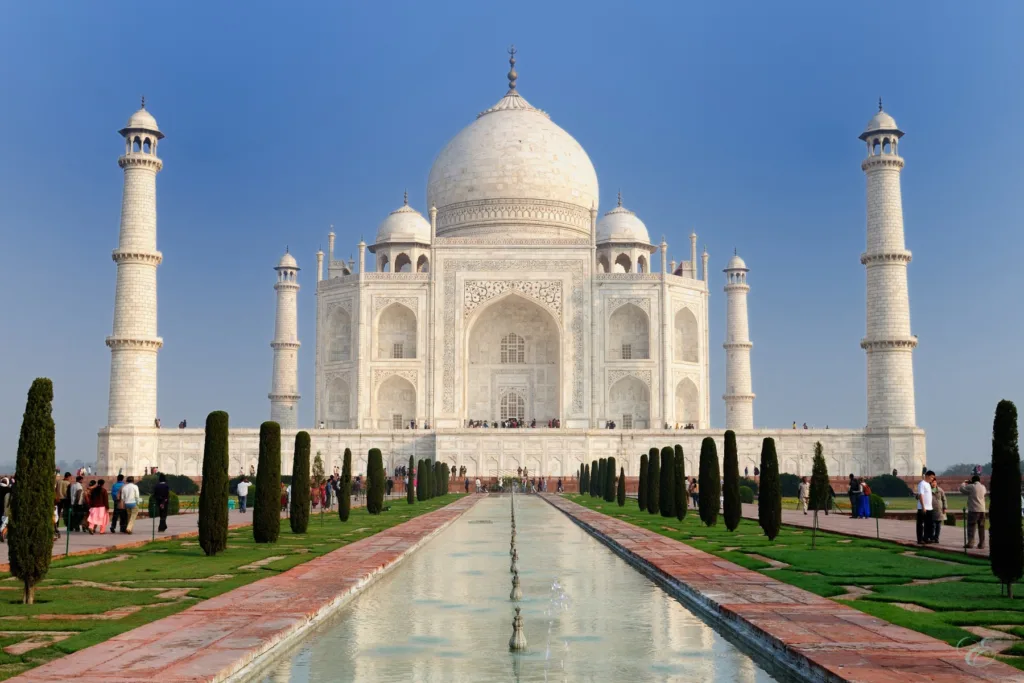
Begin in the north, where the Taj Mahal rises from the banks of the Yamuna River. Built as a monument to love, it reflects the refined artistry of the Mughal era. Nearby, Jaipur’s forts and palaces showcase royal traditions that still shape local life. Watch artisans hand-block print textiles or set gemstones the same way their ancestors did centuries ago.
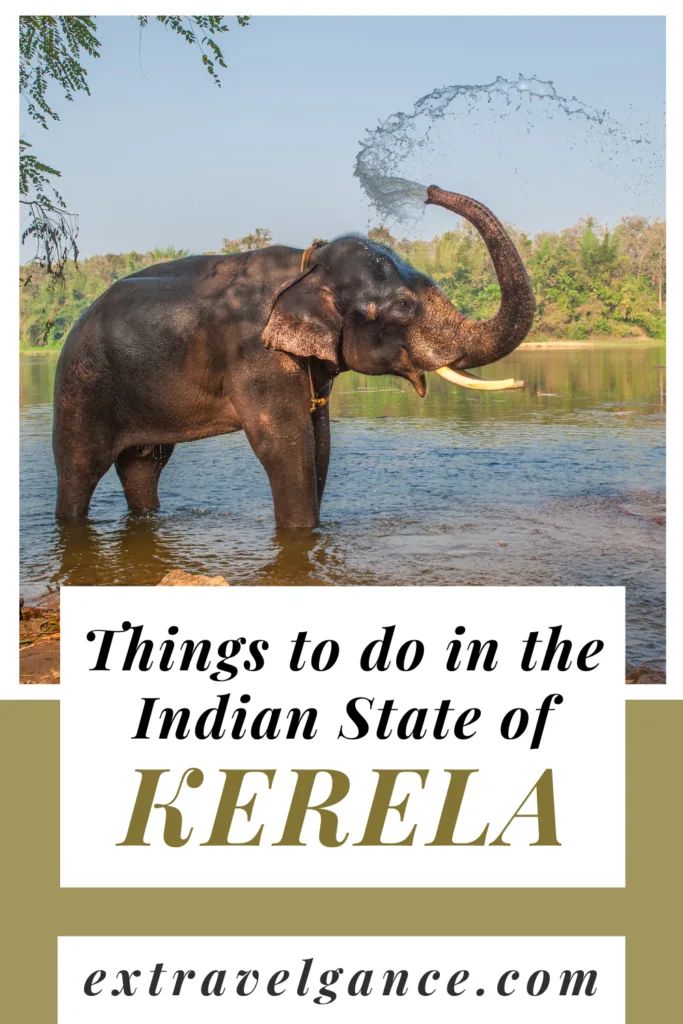
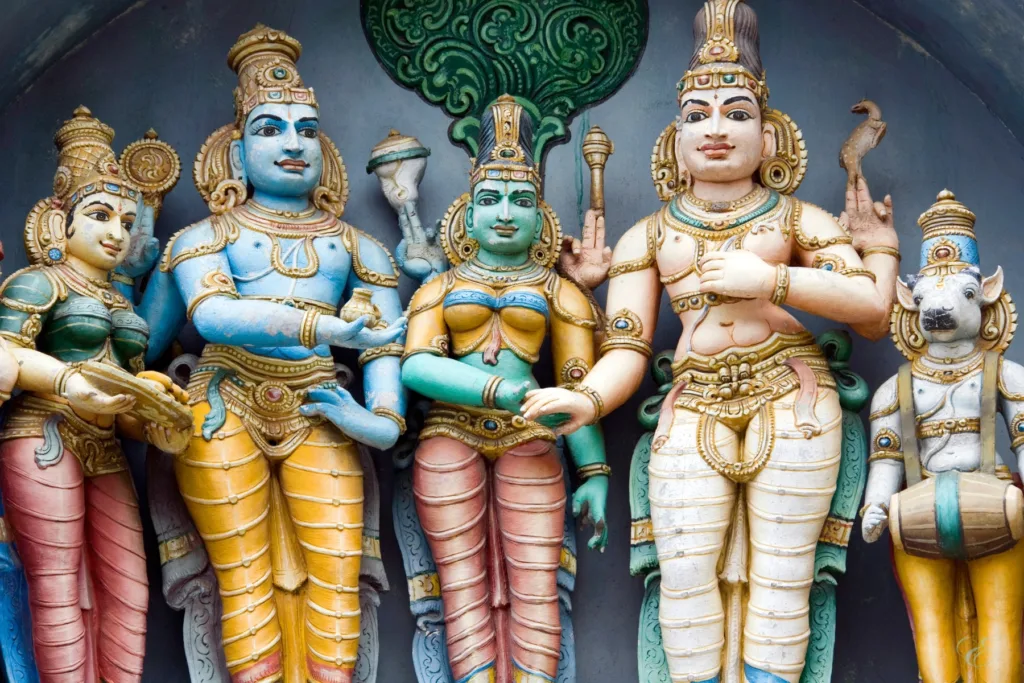
Travel south and feel the country change. In Tamil Nadu and Kerala, towering temple gopurams burst with sculpted gods, dancers, and mythological scenes. Priests chant ancient Sanskrit verses while oil lamps flicker against stone walls. Classical dances like Bharatanatyam bring epics such as the Ramayana to life.
In West Bengal, poetry, literature, and intellectual debate fill café conversations. Meanwhile, the Durga Puja festival turns entire cities into open-air art galleries. In Gujarat, folk music and dance echo across desert landscapes, celebrating harvests, seasons, and community bonds.
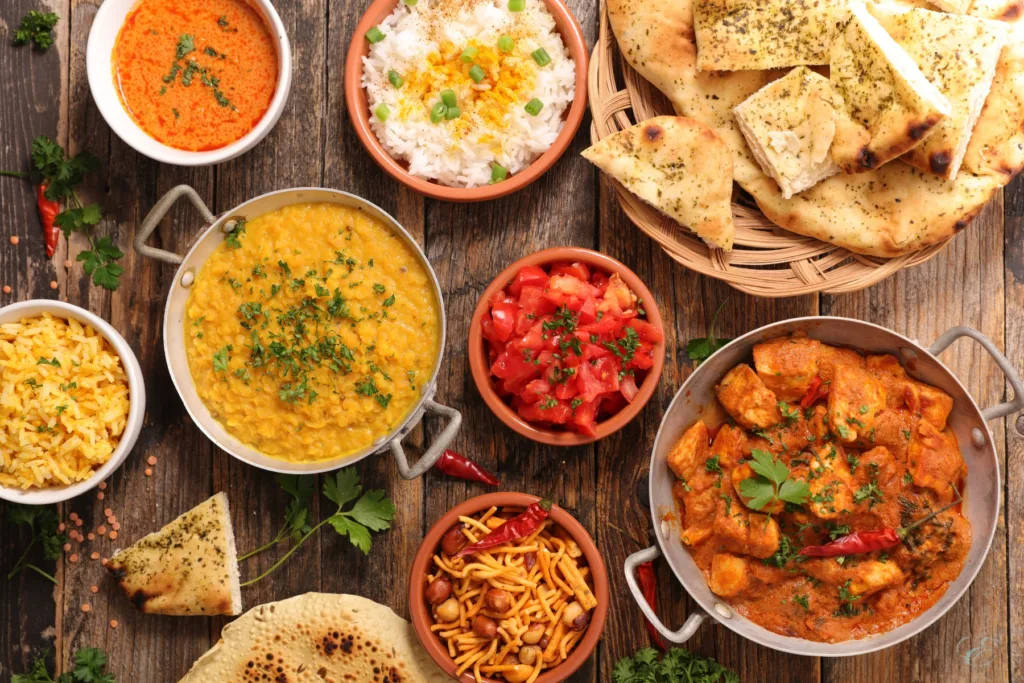
Food ties it all together. Each region cooks its history into every meal. Share a banana-leaf meal in the south, savor street snacks in Delhi, or enjoy slow-cooked curries in a village home. Eating in India always feels communal, generous, and deeply meaningful.
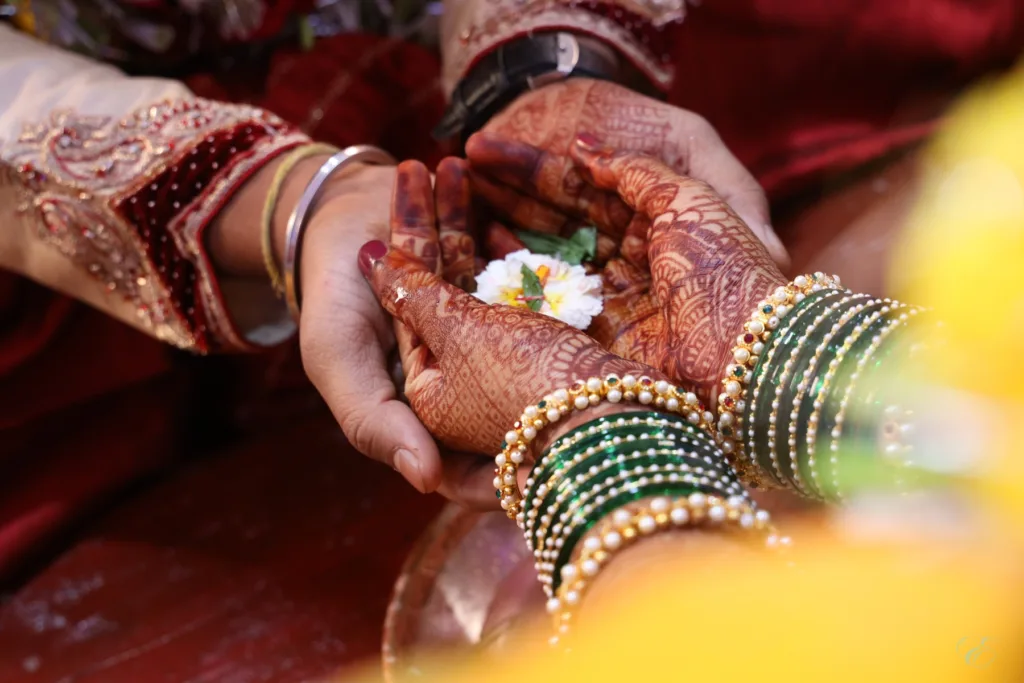
Festivals erupt in joyful color, from Holi’s clouds of paint to Diwali’s glowing lamps. Families pass down languages, crafts, music, and beliefs with pride and purpose.
Awe-Inspiring Architecture
India tells its story in stone, brick, and marble. Architecture rises not only as shelter or ornament, but as a bold expression of faith, power, artistry, and imagination. Old and new coexist effortlessly. Glass skyscrapers rise beside centuries-old shrines, and daily prayers echo within walls that have stood for generations.
In Khajuraho, sculpted sandstone temples celebrate life in all its forms. Their intricate carvings flow seamlessly across walls and pillars. In the south, Dravidian temples dominate entire cityscapes. Towering gopurams soar above bustling streets, layered with vividly painted deities.
Move north and watch the skyline shift under Mughal influence. Emperors blended Persian elegance with Indian craftsmanship to create architectural masterpieces. The Taj Mahal stands as the crown jewel. It is perfectly symmetrical, luminous at sunrise, and impossibly refined. In Delhi and Agra, grand forts and mosques combine red sandstone, marble inlay, and expansive courtyards designed to project strength and serenity at once.
Travel west and discover how architecture adapts to the land. Rajasthan’s desert forts rise from rocky hills like natural extensions of the earth. The Mehrangarh and Amber Fort use thick walls, shaded corridors, and strategic views to conquer both heat and invading armies.
Colonial-era buildings add another layer to India’s architectural identity. Victorian Gothic, Art Deco, and Indo-Saracenic styles line busy streets in cities like Mumbai, Kolkata, and Chennai. These structures reveal a complex chapter of history. They also showcase how Indian architects absorbed foreign styles and reshaped them into something uniquely local.
Spiritual Journeys
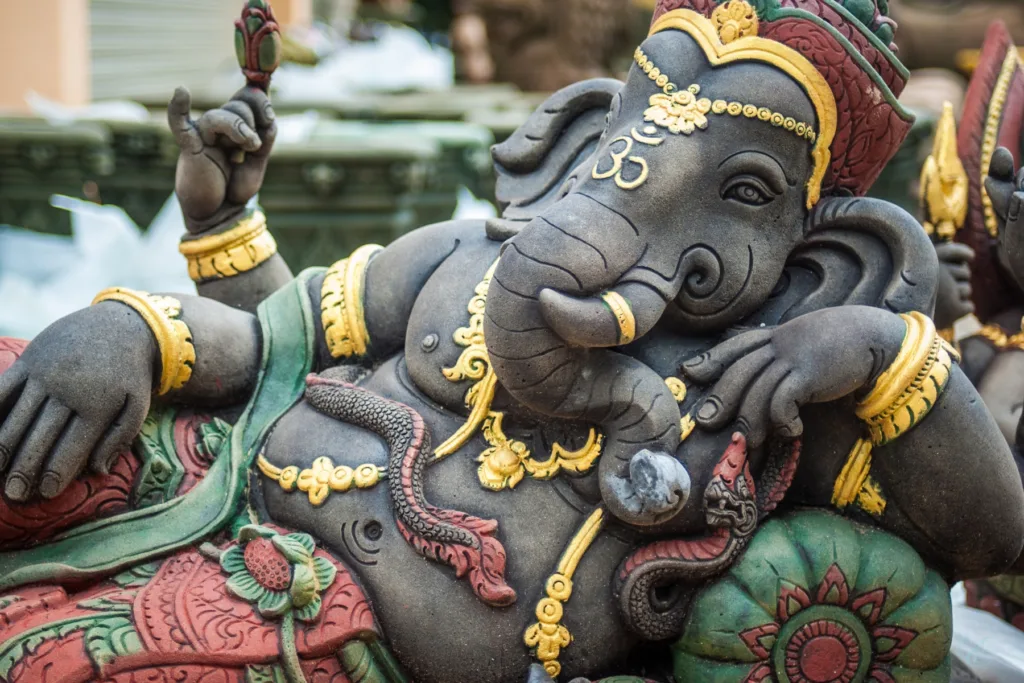
India doesn’t separate spirituality from daily life—it weaves it into every moment. Travelers who journey here don’t simply visit sacred places. They step into traditions that guide millions of lives. From mountain shrines to riverbanks and desert temples, India invites travelers to explore spirituality as a lived, breathing experience.
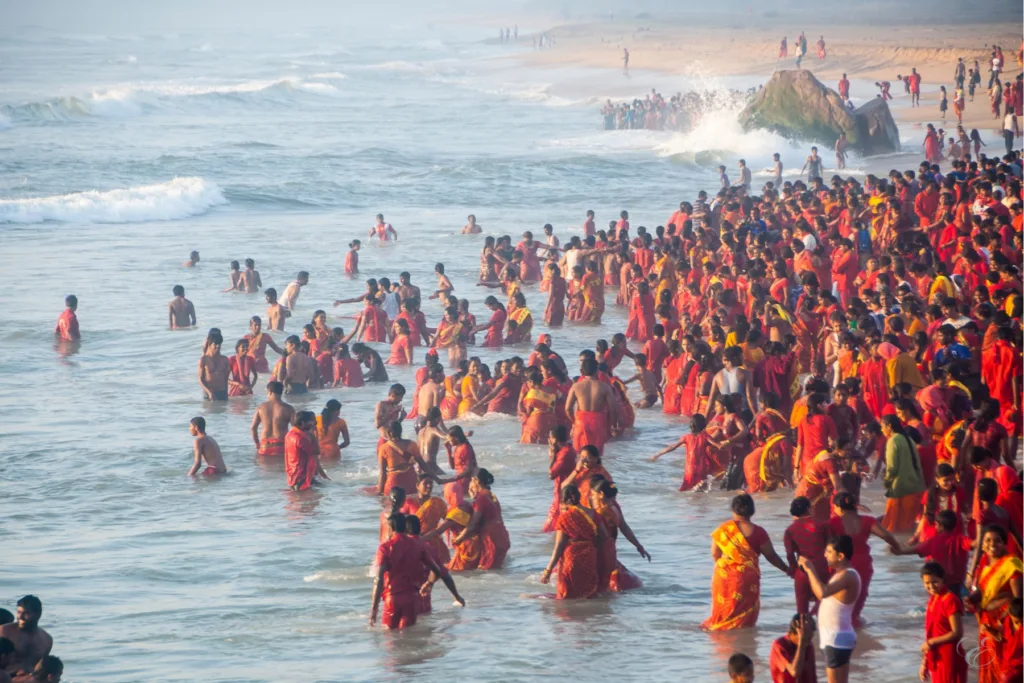
Begin along the Ganges, where faith flows as steadily as the river itself. In Varanasi, pilgrims greet the sunrise with prayers and offerings, believing these waters cleanse the soul. At dusk, priests perform the Ganga Aarti, lifting flames to the sky as chants ripple across the river.
North, in the Himalayas, spirituality meets solitude. Yogis practice meditation beside rushing rivers and ashrams open their doors to those seeking stillness and clarity. Yoga and meditation here feel less like activities and more like ways of being.
Journey across India and encounter a mosaic of faiths. Buddhism originated 2500 years ago in India. Founded in the 15th century, Sikhism welcomes you into the Golden Temple in Amritsar. Volunteers serve free meals to thousands each day, embodying humility and service. In Ajmer, the Sufi Shrine draw devotees who seek healing through music, prayer, and shared devotion.
Southern India offers its own spiritual rhythm. Temple towns such as Madurai and Tiruvannamalai pulse with ritual, pilgrimage, and sacred geometry. At dawn, bells ring and incense curls through ancient corridors.
What makes a spiritual journey in India so powerful is its openness. You don’t need to belong to a particular faith to participate. Sit quietly, observe respectfully, or join in—the choice is yours.
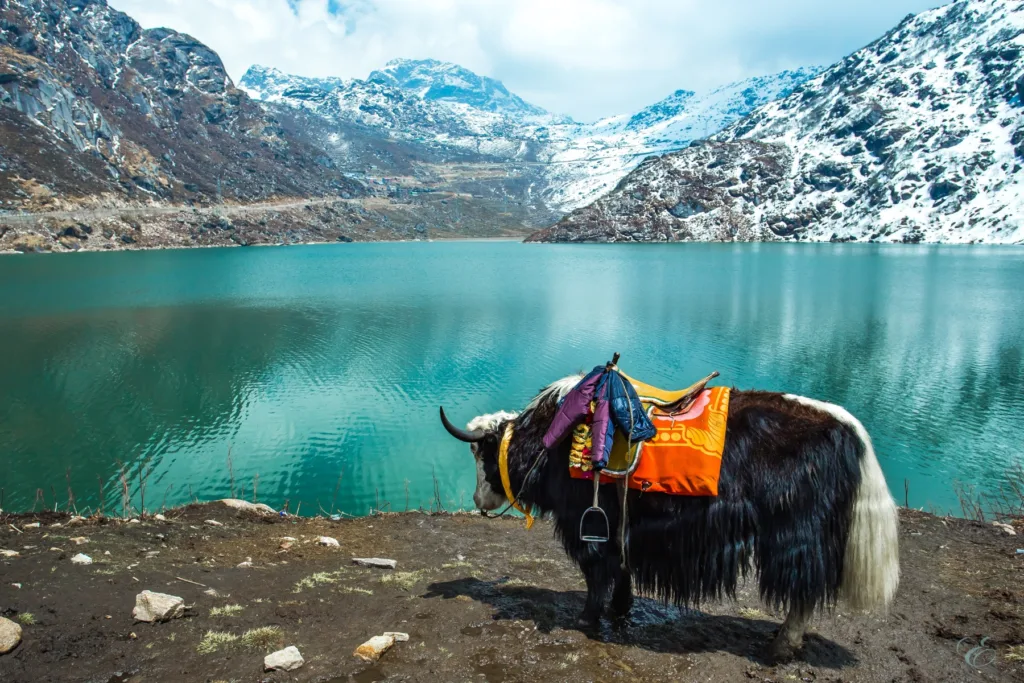
The Great Outdoors
India reveals its wild heart through extraordinary landscapes that shift dramatically from one region to the next. Snow peaks give way to deserts, jungles melt into coastlines, and rivers carve stories older than civilization itself.
Begin in the Himalayas, where nature rises in quiet majesty. Snow-capped peaks tower above pine forests and deep valleys. Trekking trails wind past glacial lakes and high-altitude passes, rewarding every step with breathtaking stillness.
Move south and enter India’s lush heartlands. The Western Ghats stretch along the coast, blanketed in rainforests alive with birdsong and hidden waterfalls. These ancient hills shelter rare species and feed rivers that sustain millions. Further east, the Sundarbans National Park features a mysterious mangrove world where land and water blur. Here, the elusive Royal Bengal tiger moves silently through tidal forests.
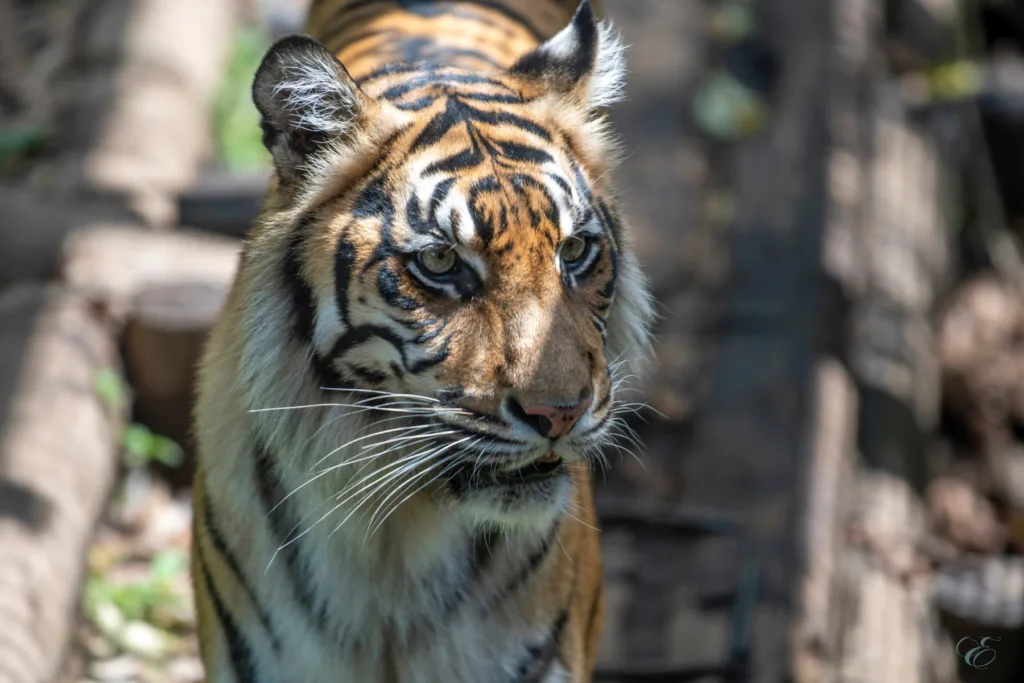
India’s national parks bring wildlife into sharp focus. In Ranthambore and Bandhavgarh, tigers emerge from tall grass with quiet authority, while deer freeze in their tracks. In Kaziranga, one-horned rhinoceroses graze across floodplains, and elephants roam freely through tall reeds. Each safari in India is a breathtaking surprise.
Contrast this with the stark beauty of the Thar Desert, where golden dunes ripple beneath endless skies. Camels cross the horizon at dusk, and desert wildlife thrives against all odds. To the south and east, India’s coastline stretches for thousands of miles, offering palm-fringed beaches, coral reefs, and fishing villages shaped by the tides.
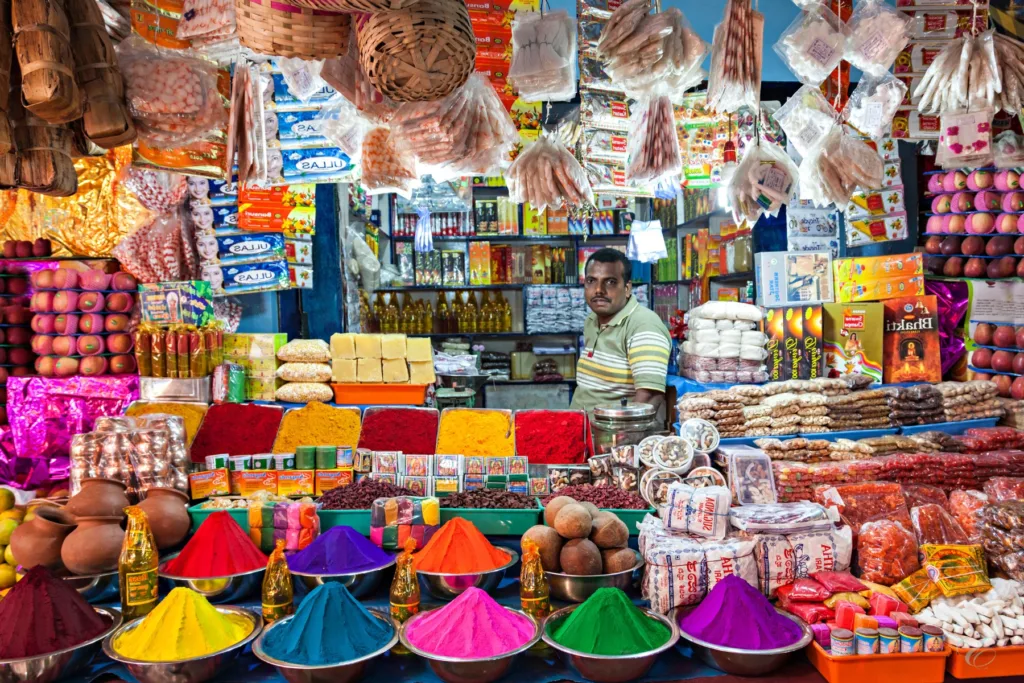
Shopping and Handicrafts
Shopping in India feels less like a transaction and more like a cultural exchange. Across India, markets buzz with energy, color, and craftsmanship. Silk scarves shimmer in the light, brass lamps catch your eye, and the scent of spices drifts through narrow lanes. Markets overflow with textiles, jewelry, pottery, and leather goods.
Textiles are the heart and soul of Indian handicrafts. Artisans create vibrant block-printed fabrics using hand-carved wooden stamps. Weavers produce luxurious silk sarees threaded with gold and silver. From soft Kashmiri pashmina shawls to colorful Bandhani tie-dye, fabric in India carries both beauty and heritage.
Jewelry showcases another layer of artistry. Tribal silver, delicate filigree, and gemstone-studded designs reveal regional identities and cultural symbolism. Many pieces still draw inspiration from royal courts and ceremonial traditions.

Handcrafted objects extend beyond fashion. In the south, artisans carve sandalwood and teak into intricate figures. Glassmakers shape glowing bangles by hand. Blue pottery, Bidri metalwork, and hand-painted Madhubani art will tempt any shopper.
What makes shopping in India unforgettable is the human connection. Many artisans work in family-run workshops where you can watch the creation process. Buying directly supports communities and keeps traditional crafts alive.
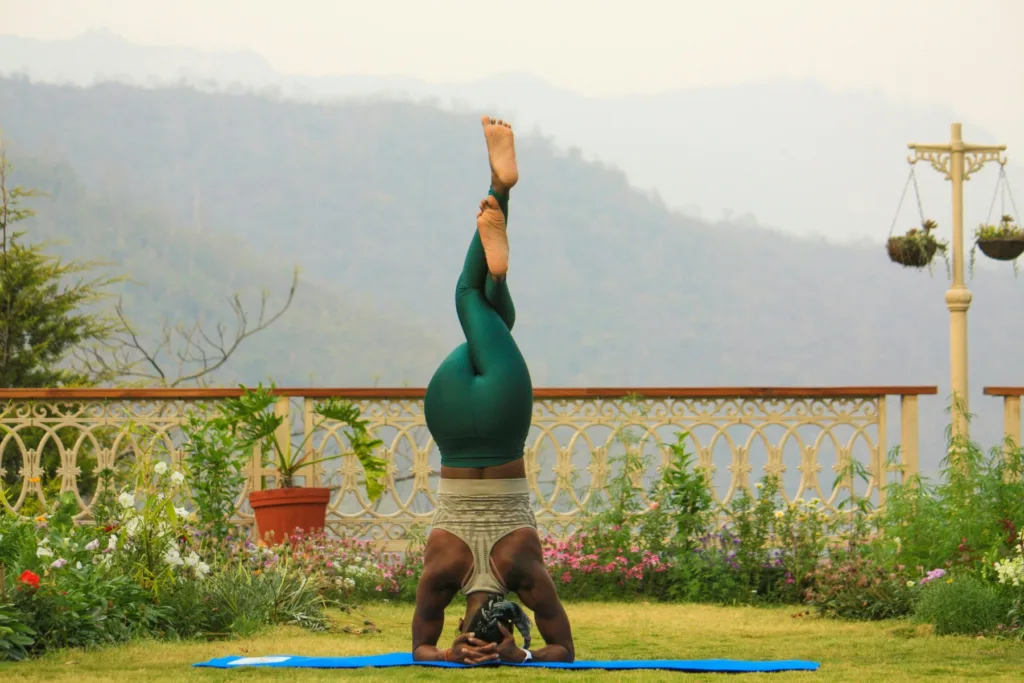
Wellness & Ayurveda
India invites travelers to slow down, breathe deeply, and reconnect. Ayurveda forms the foundation of wellness traditions in India. Practitioners design personalized treatments using herbal oils, massage, yoga, and diet.
Yoga takes on deeper meaning in its birthplace. Practice moves beyond physical postures into breathwork, meditation, and philosophy. Morning sessions often begin at sunrise, when the air feels still and purposeful.
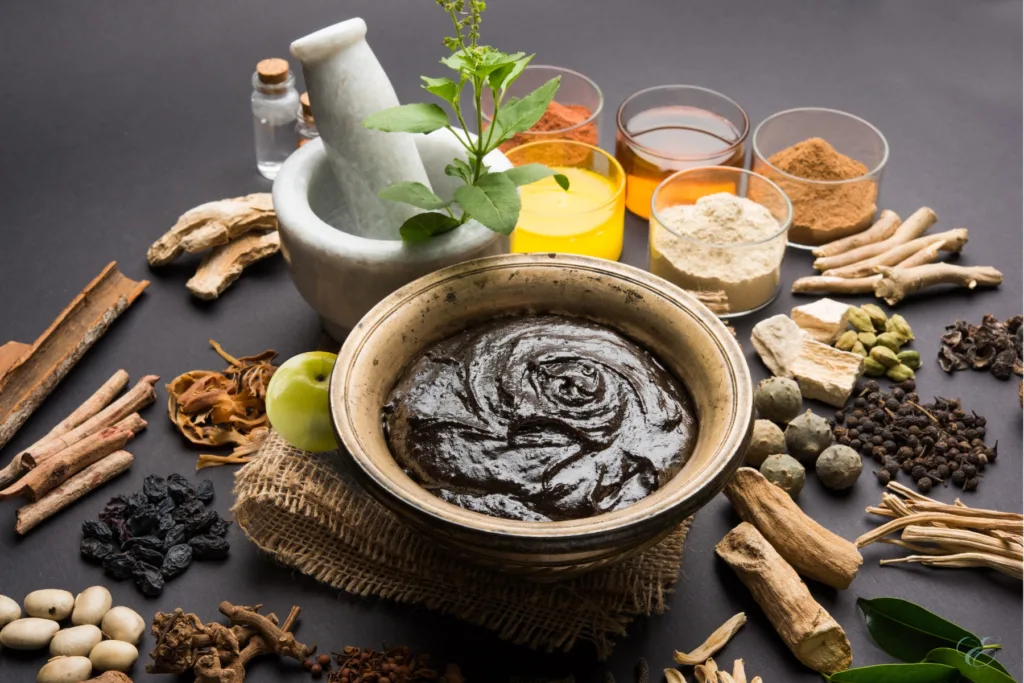
Nature enhances every wellness journey. Mountain air sharpens awareness, forests quiet the senses, and ocean waves steady the rhythm of the day. Meditation in India often happens outdoors—by rivers, in temple courtyards, or beneath ancient trees.
What sets India apart as a wellness destination is its holistic approach. Food, movement, rest, and intention work together, guided by traditions refined over thousands of years.
India is Affordable
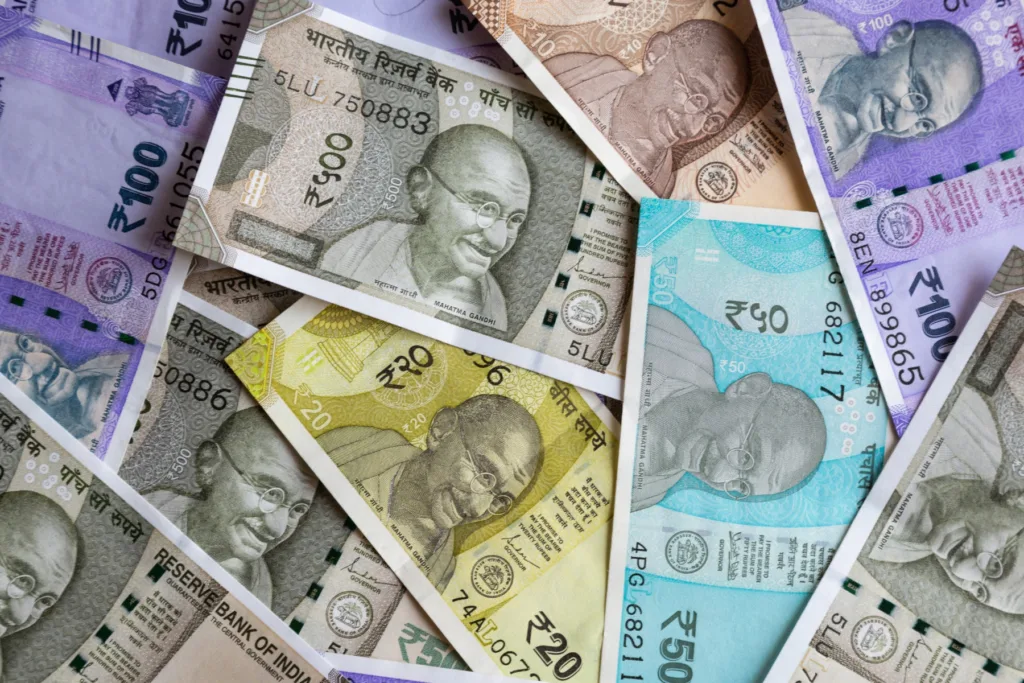
India proves that extraordinary travel doesn’t have to come with an extraordinary price tag. The country offers remarkable value. You can experience deep culture, diverse landscapes, and meaningful encounters without stretching your budget. In other words, you get a lot for your rupees (Indian currency).
Accommodation options suit every traveler. Clean boutique hotels provide comfort at a fraction of what similar stays cost elsewhere. Even luxury comes at a gentler price. Heritage palaces, eco-lodges, and five-star resorts often feel indulgent while remaining surprisingly accessible.
Getting around is easy and economical. Trains connect cities, villages, and regions with efficiency. Local buses, metro systems, and affordable ride services make daily travel simple, while domestic flights offer competitive fares for longer distances.
Food delivers some of the best value of all. Street stalls and small restaurants serve fresh, flavorful meals for just a few dollars, without sacrificing quality or authenticity.
Activities and experiences also remain budget friendly. Entrance fees to historic sites, temples, and national parks are reasonable. Guided walking tours, yoga classes, cooking lessons, and cultural performances cost comparatively little. India shows that meaningful travel isn’t measured by expense. It’s measured by experience.
A Word About Safety in India
Many people ask about safety in India. Just like anywhere, there are places you should not go alone, and places you should avoid altogether. According to the U.S. Department of State, the bulk of India falls at a Level 2 Advisory Level. This means you should exercise increased caution.
For perspective, very few places outside the US and Canada are rated a Level 1 (Exercise Normal Precautions). Truth be told, the US isn’t rated at all. Other countries rated a Level 2 include the United Kingdom, France, the Netherlands, Sweden, and Germany. So, if you aren’t afraid to go see the Eiffel Tower, then India shouldn’t scare you either.
Please note: There are a few areas currently marked at Level 3 (Reconsider Travel) and 4 (Do Not Travel). These areas fall primarily in the Northeaster States and the India-Pakistan Border. These are not difficult areas to avoid.
No matter where you plan to travel, always exercise common sense and caution. Also, always refer to the U.S. Department of State website for updated information about your destination and enroll in the Smart Traveler Program before you leave the country.
Plan Your Visit to India Today
In essence, India isn’t just a destination—it’s an experience. It’s a place that challenges, inspires, and enchants you at every turn. So, get busy and start planning a visit to India!
Tell us what you think below in the comments. You can also contact us and follow us on Facebook, Instagram and Pinterest so you never miss a post!